

First Time Massage Tips for a Restful Visit
The first few minutes of a massage can feel unfamiliar: a quiet room, a new therapist, and the welcome realization that you do not have to hold the day’s tension any longer. These first time massage tips are here to replace uncertainty with ease, so you can settle into an experience designed around your comfort, needs, and restoration.
Before Your First Massage: Choose the Right Intention
You do not need to arrive with a perfect explanation of what hurts or exactly which technique you need. A simple intention is enough. Perhaps your shoulders feel tight after long workdays, your legs are fatigued from training, or you want an hour of calm after a demanding season. Sharing that goal helps your therapist shape the session with care.
Massage styles feel different, and the best choice depends on what your body needs that day. Relaxation massage uses gentler, flowing techniques for stress relief and a deeply restful state. Deep tissue massage is more focused and may use slower, firmer pressure on persistent areas of tension. Traditional Thai Massage often combines rhythmic pressure with mindful assisted stretching to encourage mobility, balance, and renewed energy. A Thai Combination Massage can blend therapeutic work, stretching, and relaxation in one personalized treatment.
There is no prize for choosing the most intense service. If you are new to massage, a relaxation-focused session or a customized Thai combination can be a welcoming place to begin. If a particular area has been bothering you, say so when booking and again during your consultation.
Arrive Early Enough to Exhale
Plan to arrive about 10 to 15 minutes before your appointment, especially for your first visit. This gives you time to complete any intake forms, use the restroom, silence your phone, and transition out of traffic, meetings, errands, and responsibilities. Rushing through the door can make it harder to relax into the first portion of your service.
Eat lightly beforehand rather than arriving overly full or very hungry. Drink water as you normally would, but there is no need to force large amounts just before a session. Skip alcohol before your massage, since it can affect how you feel and make it harder to assess your comfort clearly.
Wear clothes that are easy to change out of and back into. For oil-based table massage, you will undress to your personal comfort level and remain professionally draped throughout the service. Only the area being worked on is uncovered. For Traditional Thai Massage, loose, comfortable clothing is typically best because the session may include movement and stretching.
What to Say During the Consultation
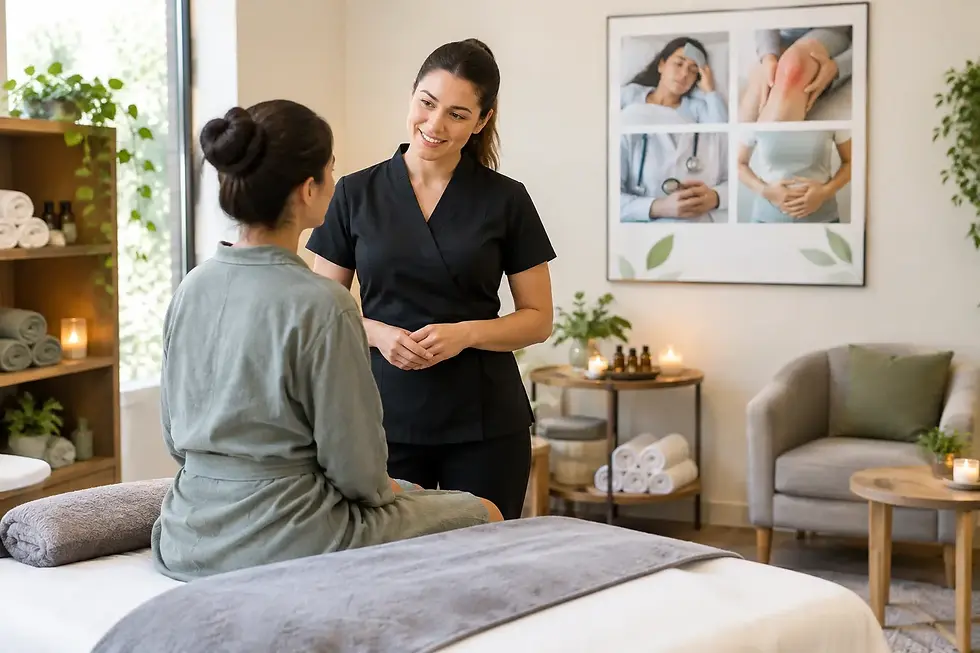
Your therapist cannot feel your schedule, stress level, old injuries, or pressure preferences without your guidance. The consultation is not a test. It is simply a moment to create a treatment that feels right for you.
Let your therapist know about recent soreness, surgeries, injuries, pregnancy, skin sensitivities, allergies, medications that affect bruising or sensation, or any health concerns relevant to bodywork. Some situations may call for a gentler approach, a change in technique, or clearance from a medical provider. Honest information supports a safer, more restorative experience.
It also helps to name the kind of pressure you enjoy. You might say, “I prefer light to medium pressure,” “My upper back can handle focused work, but my calves are sensitive,” or “I am nervous about deep pressure.” Those details are useful, not demanding. A skilled therapist welcomes them.
First Time Massage Tips for Speaking Up
The most valuable first time massage tips are often about communication. Your comfort matters from the first minute to the last, and small adjustments can make a significant difference.
If the pressure feels too strong, say so early. You do not need to wait until it becomes painful. Try, “Could we go a little lighter there?” If pressure feels too gentle and you would like more focused work, you can ask for that as well. Productive pressure may feel intense at times, particularly in tight muscles, but sharp pain, pinching, burning, numbness, or a feeling that makes you hold your breath is a signal to speak up.
Room temperature, face-cradle position, music volume, and the amount of conversation are also adjustable. Some guests enjoy a quiet check-in and then complete silence. Others relax more easily with occasional conversation. Either preference is completely appropriate.
You may also ask questions before or during the treatment. If your therapist uses a technique you have not experienced before, such as Thai stretches or hot stones, it is fine to ask what it is intended to do and how it should feel. Clear communication allows you to stay present rather than wondering whether you should simply tolerate something unfamiliar.
Understand Professional Draping and Boundaries
Massage should feel peaceful because it is structured around professionalism, consent, and respect. Your therapist will leave the room while you get settled and will knock before returning. During a table massage, professional draping protects your privacy at all times. You may keep undergarments on if that helps you feel more comfortable.
You are always in control of your boundaries. You can request that an area be avoided, such as the abdomen, scalp, feet, or glutes. You can ask to stop a stretch, change positions, take a break, or end the service. There is no need to apologize for a boundary. The purpose of massage is to help you feel cared for in your own body, not pressured to endure an experience that does not feel right.
Let Your Body Receive the Work
Many first-time guests try to help by lifting an arm, holding a leg in place, or tightening a muscle before the therapist reaches it. When you notice this, gently let the limb become heavy again. Your therapist will guide you when movement is needed.
Breathing slowly can make a real difference, especially during focused work or assisted stretches. Instead of bracing against sensation, try a longer exhale. This does not mean you must push through discomfort. It simply gives your nervous system permission to soften when the pressure is within a comfortable range.
You may fall asleep, feel emotional, or become aware of how much tension you have been carrying. All of these responses can be normal. Massage creates quiet space, and the body sometimes responds to that quiet before the mind catches up.
After Your Massage: Keep the Calm Going
When the session ends, take your time getting off the table. Moving slowly is especially helpful after deep tissue work or Thai stretching. Drink water, have a nourishing meal when you are ready, and give yourself a little space before returning to a crowded schedule if possible.
You may feel immediately lighter, more open, and deeply relaxed. You may also notice mild tenderness the next day after focused therapeutic work, much like the feeling after unfamiliar exercise. Gentle movement, comfortable hydration, and rest can help. If discomfort feels unusual, severe, or continues beyond what seems reasonable, contact a qualified health professional.
Avoid judging the value of a massage only by how sore you feel afterward. Stronger is not automatically better. The right session may leave you calm, mobile, and refreshed, or it may begin a gradual process of addressing long-held tension over several visits. Your therapist can suggest an approach based on your goals without treating every body the same way.
Make Massage Part of Your Restoration
A first appointment does not have to answer every need at once. Think of it as the beginning of a conversation with your body and your therapist. At Serene Massage, each service can be tailored around the pressure, techniques, and areas of focus that help you feel most at ease.
Whether you choose a quiet relaxation massage, therapeutic deep tissue work, or the grounding rhythm of Thai healing traditions, give yourself permission to receive care without needing to earn it. Your perfect massage begins with one honest breath, one clear preference, and the decision to make room for restoration.


Comments